
Celebrating 50 Years with Our Wild and Scenic “Sibling”
While Flathead Rivers Alliance, representatives from the federal managing agencies, and an enthusiastic group of future river stewards from West Glacier Elementary School celebrated the 50th anniversary of the Flathead Wild and Scenic River (WSR) on October 14th, I had the opportunity to celebrate the same milestone in a watershed almost 2,000 miles away on the actual anniversary designation date, Oct. 12th.
The Obed River system is Tennessee’s only WSR, protecting just over 45 miles of river which represent only seven one-hundredths of 1% of the state’s river miles (0.0007 percent!). The river lies in the headwaters of central Tennessee’s Cumberland Plateau, a high landscape of sedimentary rock formations just west of the Appalachian Mountains.
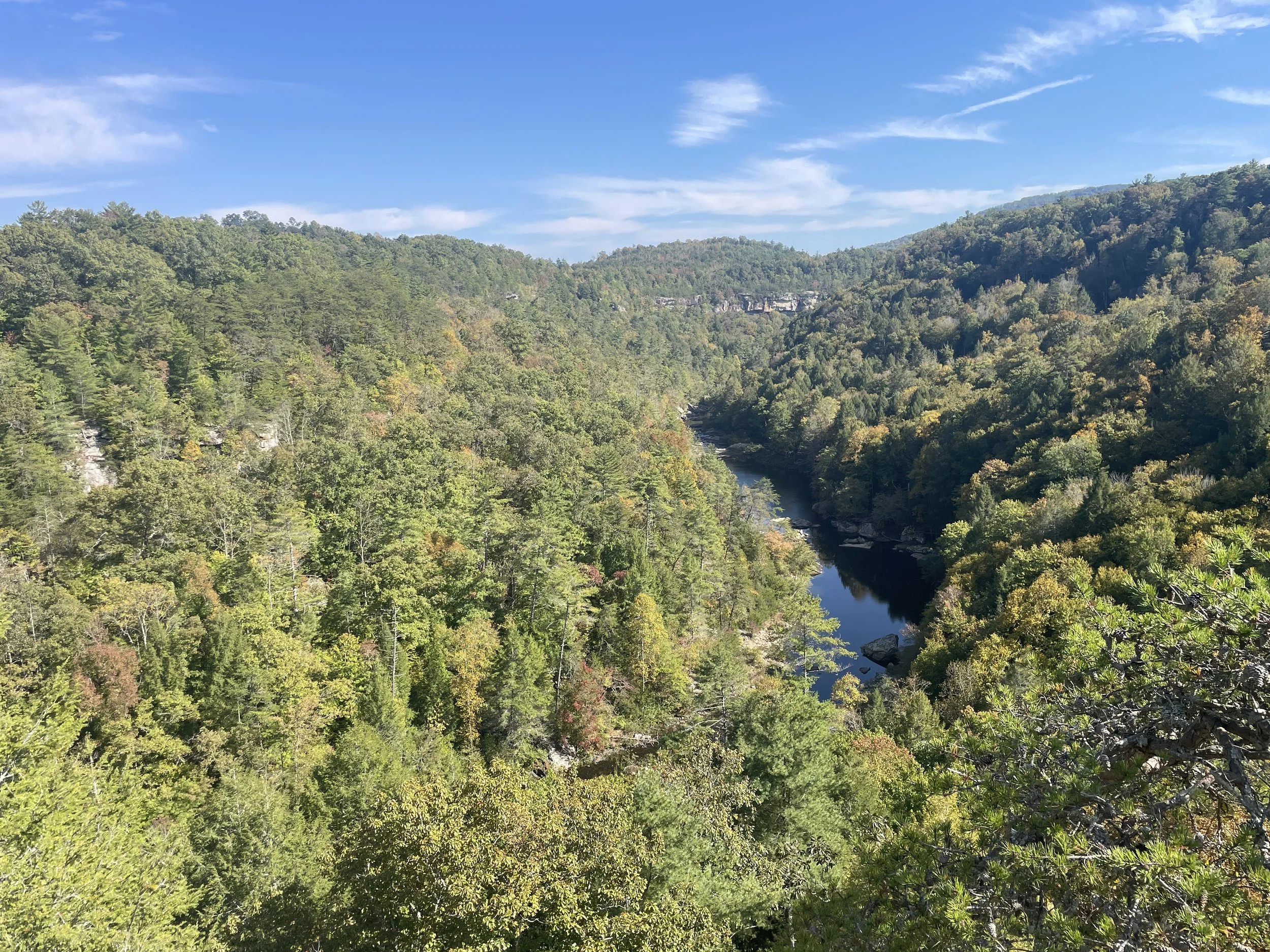
Looking over the Obed Wild and Scenic River from Lilly Bluff on a sunny 50th anniversary afternoon.
Much like the Flathead and its three forks, the Obed WSR protects three waterways: the Obed itself, Clear Creek, and Daddy’s Creek. It earned its designation on a nearly identical list of Outstandingly Remarkable Values to the Flathead, with diverse wildlife and fish communities, unique geology, stunning scenic views, indigenous and ethnographic sites, deep historical legacy, old-growth botanical communities, and exceptional recreational opportunities. The Obed is protected by a similar web of overlapping land and water designations as the Flathead, with the National Park Service (NPS) implementing its river management plan, the Tennessee Wildlife Resources Agency (TWRA) administering the Catoosa Wildlife Management Area (CWMA) on a large swath of the Obed drainage, the Tennessee Department of Environment and Conservation (TDEC) managing the waterway under the state’s Outstanding National Resource Water (ONRW) designation, the Tennessee Valley Authority (TVA) managing water quality and planning future use, and of course some dedicated community organizations helping to make sense of the alphabet soup of river management.
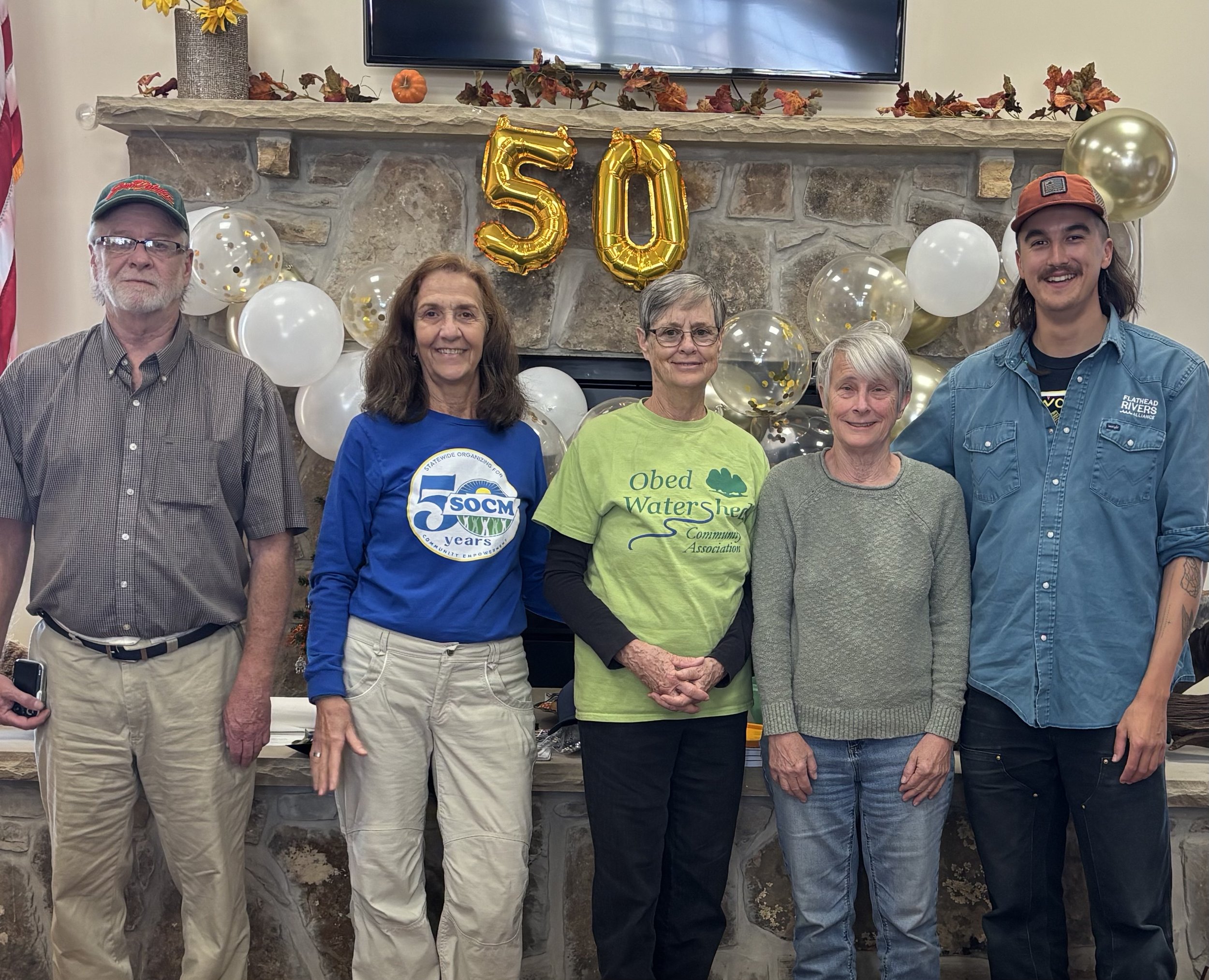
(Left to right) Randall Kidwell, Jean Cheely, Pat McKean, Jenna Walls, and Geoffrey Gill meet to discuss river management and celebrate 50 years of Wild and Scenic status on the Obed and Flathead Rivers.
Jean Cheely serves as Obed Watershed Community Association’s (OWCA) Board President and she set up a discussion group to introduce me to the area, the river, and some current events on the Obed WSR. On the morning of the big anniversary, I was given the chance to sit down with Cheely; Don Barger, retired National Parks Conservation Association Southeast Regional Director; Randall Kidwell, local USGS fisheries scientist and area water historian; Pat McKean, the Vice President of OWCA; Jenna Walls, OWCA’s treasurer; and Danny Wyatt, a Crossville City Council candidate. Our conversation spanned from the organization’s founding to differences in land preservation on either side of the Mississippi to the pressing concerns faced in preserving the Obed today.
Later in the day, OWCA and another organizing group, Statewide Organizing for Community Empowerment (SOCM), hosted a tour of Crossville’s Meadow Park Water Treatment Plant to inform the public regarding an upcoming referendum on the city’s water rights which may have repercussions on the next 50 years of a free-flowing Obed Wild and Scenic River. Following this meeting, participants gathered for a celebration of the Obed WSR designation anniversary and the region’s unique and imperiled aquatic resources.
Though Obed National Park is based in nearby Wartburg, TN, Crossville’s connections to the Obed River are deeply rooted. In McKean’s words, “if a river can be born, [the Obed] is born here, everyday… in Crossville.” While some of the folks active with OWCA are born and raised in the watershed, others, like Cheely were drawn here by the natural resources and recreational opportunities available nowhere else. The region has a long history of community organizing to preserve free-flowing rivers, with Tennessee Citizens for Wilderness Planning emerging in nearby Oak Ridge in the late 1960’s to lead dual initiatives preventing the damming of the Obed River and the nearby Big South Fork, resulting in their respective designations as a National Park and a National River.
Threats to a free-flowing Obed River continued after its 1976 WSR designation, with more dams proposed on the Obed River itself and in the headwaters of both the Obed River and Clear Creek in the late 1990’s, early 2000’s, and mid 2010’s. OWCA formed in response to these repeated battles over water resources to serve as a concerted, river focused, community advocacy network working to maintain free flows and to conduct vital restoration and education work to protect the watershed. The group began with a focus on water quality monitoring on the Obed WSR and all its tributaries and it grew to manage several conservation and restoration easements, to lead volunteer river stewardship projects, and to spearhead education efforts to audiences of all ages in the area.
“Every single time you fight a dam fight, you’re fighting an incremental loss to the resource that is the Obed, and you either solve the larger problem or you’re just preparing yourself for the next fight”
Even now, despite decades of close calls, committed community management, and conservation successes including the state’s only Wild and Scenic River designation, ongoing effort is required to maintain a largely free-flowing Obed. Our afternoon visit with SOCM to the Meadow Park Water Treatment Plant was related to a municipal ballot referendum that would give the Crossville City Council the authority to transfer its water and sewer utility to the ownership and control of the Cumberland Plateau Water Authority (CPWA), if deemed by the Council to be in the best interests of the city.
Proponents point towards spreading necessary infrastructure, maintenance, and expansion costs across a wider group of rate payers to reduce overall rates at scale. The regional CPWA would also connect a network of counties to share water resources, allowing places with fewer natural water sources and less municipal infrastructure to benefit from communities like Crossville with more robust water resources.
OWCA and SOCM advocate a “no” vote, calling to maintain Crossville’s uniquely independent and community-driven utility district while further planning and cost analysis are conducted justifying a potential merger. Of particular concern is CPWA’s promotion of reservoirs upstream of the Wild and Scenic stretches of Clear Creek and Daddy’s Creek as possible future water sources, which could damage these rivers’ outstanding character and largely free flows.
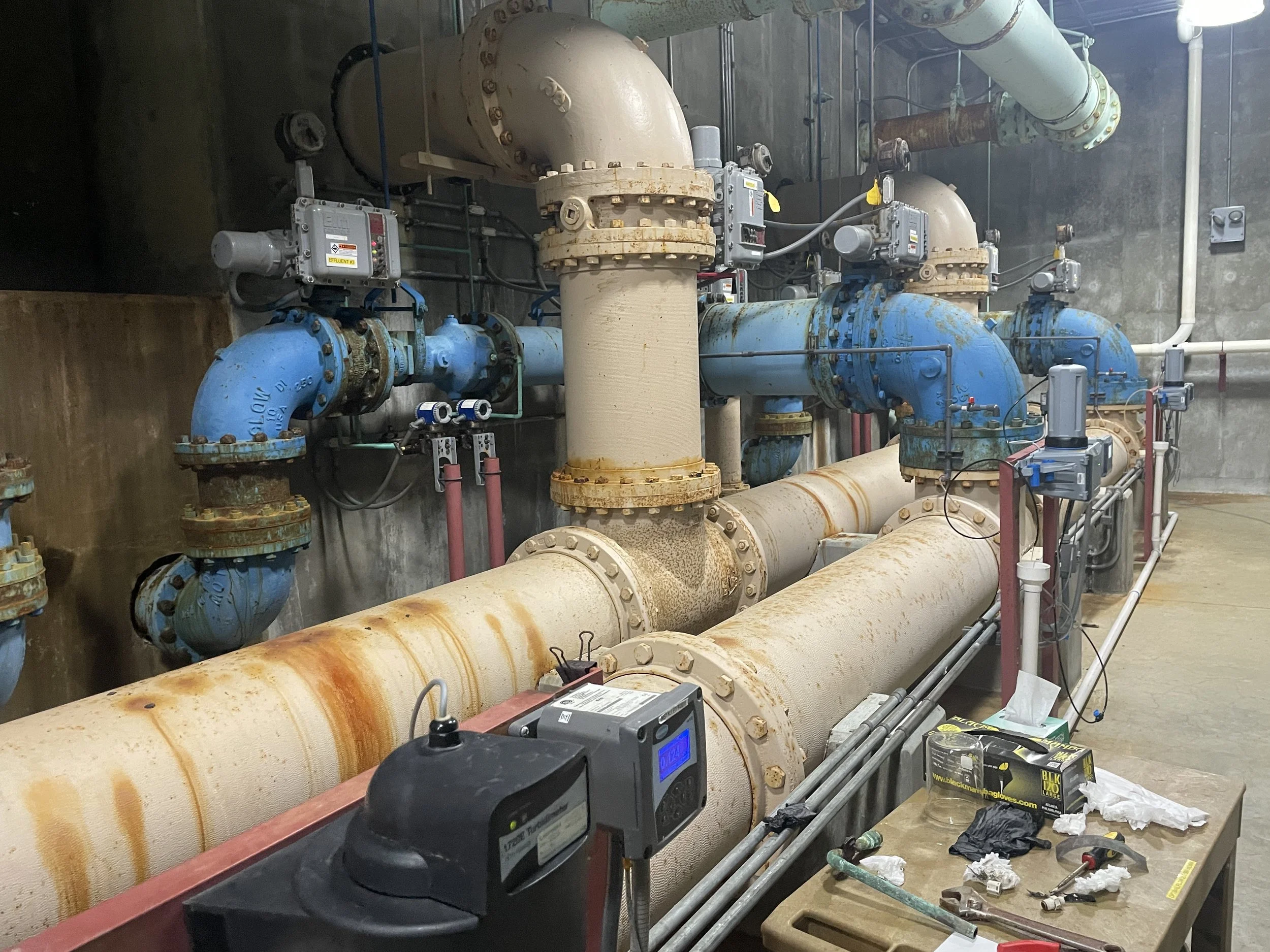
Inside the infrastructure of Crossville's Meadow Park Water Treatment Center, one of the key subjects of an upcoming referendum to help determine the future of water rights and development in the Obed watershed and beyond.
Whether or not this referendum passes, signaling a shift in water authority and local planning to manage the Obed Watershed, this river and its committed community demonstrate how critical the nation’s protected rivers are for providing clean water around the country. In the Flathead, we mostly rely on groundwater from wells tapping into aquifers rather than surface water for municipalities and rural residents. The City of Whitefish is unique in the Flathead that it is the only municipality that draws from surface water, sourced from the Haskill Basin watershed and Whitefish Lake. For the three Forks of the Flathead River, we most commonly regard our Wild and Scenic River system in terms of its existing outstanding water quality for fisheries, recreational opportunities, diverse wildlife, and stunning views. For many other watersheds, Wild and Scenic designations or other river protections directly link the health of rivers with the health of their human communities.
On the 50th Anniversary of our Wild and Scenic River system designations, the Obed and the Flathead both benefit from deeply rooted communities and passionate local support. While the Flathead grapples with the projected impacts of a renewed river management plan and the challenges of a growing recreational community, on the Obed a debate over management of the water utility in a growing region could be the latest in a long line of challenges to preserving this free-flowing Wild and Scenic River. My visit to our “sister river” across the country in Tennessee to celebrate this milestone is a reminder that managing a river is an ongoing commitment, but no matter what your reasons it’s a challenge worth facing.
To find out more about our friends with the Obed Watershed Community Association, or if any of you Central Tennessee river fans are interested in volunteer or board positions with their group, please visit their website using the link below: