
Rivers and Roads on the Flathead Wild & Scenic River
Flathead Rivers Alliance focuses on supporting and enhancing the Wild and Scenic Flathead River system. Our first priority is caring for our rivers, while building an engaged community through education, stewardship, and access. We’ve been keeping you informed about the latest news and ways to engage as the Flathead Wild & Scenic River’s Comprehensive River Management Plan is updated. But that’s not the only proposed rule change we want to put on your radar.
One of the keys to successfully managing the Flathead River system is the network of overlapping protections that safeguard its rivers, watersheds, lands, and natural resources. These protections come from a range of federal laws and regulations, including those governing the National Forest Service and National Park Service, the Wilderness Act, the Endangered Species Act, and, of course, the keystone Wild and Scenic River designation.
One lesser-known protection that supports the Flathead River system is an administrative regulation commonly known as the “Roadless Rule,” which many of you may have seen in the news recently.
A proposed regulatory change would eliminate Roadless Rule protections in 37 of the 39 states with Inventoried Roadless Areas, including Montana. In the Flathead River system, the Roadless Rule currently protects lands in the Trail Creek, Whale Creek, Logging Creek, and Big Creek drainages of the North Fork; the Morrison Creek, Granite Creek, Bear Creek, and other tributary drainages along the river-left side of the Middle Fork of the Flathead Wild & Scenic River between the Highway 2 corridor and West Glacier; and the Spotted Bear River, Bunker Creek, and Twin Creek drainages of the South Fork. These protections also extend to dozens of tributaries flowing into Hungry Horse Reservoir.
These streams provide habitat for native populations of federally threatened bull trout and Montana species of concern, including westslope cutthroat trout. The health of our fisheries and the outstanding water quality of the Flathead Wild & Scenic River system depend on cold, clean, clear tributary streams. These interconnected, largely intact drainages also provide critical habitat for hundreds of other plant and animal species that call the Crown of the Continent ecosystem home. They offer important recreational opportunities as well, including hiking, hunting, fishing, packing, skiing, floating, and backcountry travel.
Our local Inventoried Roadless Areas, much like vast swaths of land in areas now known as Idaho, Montana, Wyoming, Washington, and British Columbia, are the aboriginal homeland of the Confederated Salish and Kootenai Tribes (CSKT). CSKT has specifically opposed Roadless Rule rescission for violation of reserved treaty rights to government-to-government consultation on rules changes; for degradation to tribal lifeways and cultural, religious, and spiritual practices; for harm to connected wilderness habitat and ecosystems; and for the additional costs and administrative burdens of repealing the rule.
RE: FS-2025-0001-0001 EIS Rescind 0f 2001 Roadless Area Conservation Rule
https://downloads.regulations.gov/FS-2025-0001-181367/attachment_1.pdf
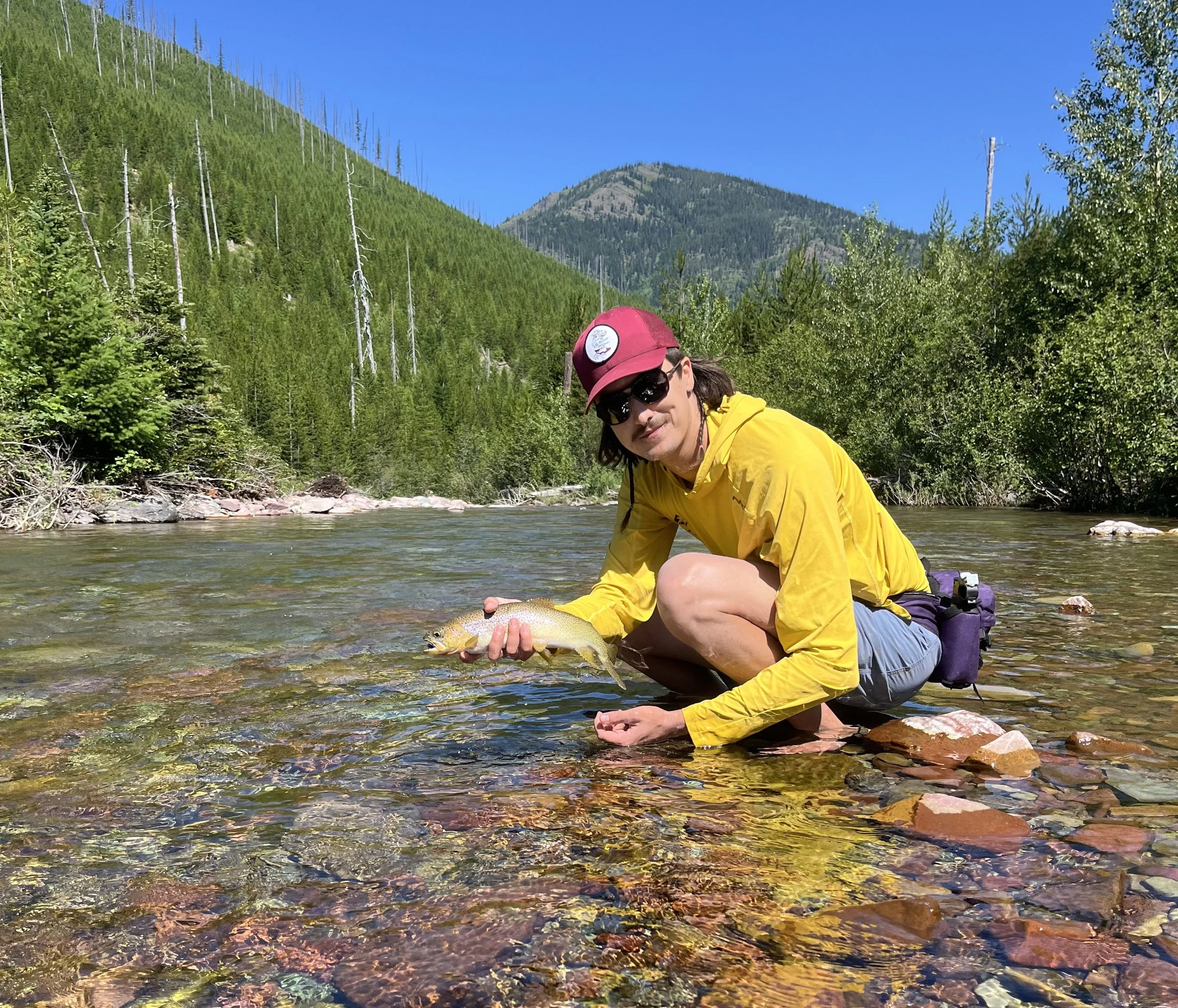
Enjoying the westslope cutthroat trout fishery in a Flathead watershed stream protected by the Roadless Rule
In 2001, the U.S. Forest Service adopted the Roadless Area Conservation Rule, following years of public input and widespread support, to protect 58.5 million acres of inventoried roadless national forest lands across 39 states. The rule’s development included an extensive public process, with a record-setting 1.6 million comments submitted during the initial public comment period. The Roadless Rule generally prohibits new road construction in these areas and restricts timber harvesting on inventoried roadless lands within the National Forest System.
Explore the relationship between Inventoried Roadless Areas and drinking-water sources using this interactive map from American Rivers.
Interactive map: “Inventoried Roadless Areas and Drinking Water,” courtesy of American Rivers.
Learn more about the Roadless Rule and rivers — American Rivers
The proposed rescission would remove these protections from Inventoried Roadless Areas. The agency cites several reasons for the proposed change, including reducing the role of blanket federal regulations in determining local management options, expanding access for industrial activities such as logging and mining, and creating additional access points for wildland firefighting. Under the proposal, the Roadless Area Conservation Rule would be rescinded in all states except Colorado and Idaho, which have state-level protections for roadless areas on their public lands.
New road construction can threaten water quality and watershed and habitat health, with potential impacts extending downstream to the Wild and Scenic Flathead River system. While new roads may provide additional access for wildland firefighting, research has found that wildfires are more than four times as likely to occur in roaded areas as in roadless areas, with the vast majority occurring within a half-mile of a road.
Roadless protections can place limits on certain activities available to local land managers, but responsible, timely, and evidence-based forest management, including hazardous fuels reduction and other timber and fuels-management efforts can and does occur within the framework of the Roadless Rule.
Aplet, G.H., Hartger, P., & Dietz, M.S. (2026). Three-decade record of contiguous-U.S. National forest wildfires indicates increased density of ignitions near roads. Fire Ecology, 22, 8. Read the study
While the Flathead may be just one watershed within the vast network of public lands influenced by the Roadless Rule, we want to make sure our local river community feels connected to this process and has an opportunity to respond.
If you want to make your voice heard regarding the proposed changes to the Roadless Rule, there is still time to submit a public comment. The public comment period has been extended through October 6, 2026.
How to Submit a Public Comment
The public comment period for the proposed rescission of the 2001 Roadless Area Conservation Rule has been extended through October 6, 2026.
If you would like to submit a comment:
Visit the official Regulations.gov comment page:
Submit a comment on Regulations.gov — Docket FS-2025-0001
PROPOSED RULE: Special Areas: Roadless Area Conservation https://www.regulations.gov/document/FS-2025-0001-223869Share your own perspective. Comments can address the proposed rule, the draft environmental impact statement, or relevant information, studies, or analyses. The Forest Service asks that comments explain the reasons for any recommended changes and, when possible, reference the specific section or wording being addressed.
Consider connecting your comments to the places you know and care about. For our local river community, you may wish to share how roadless areas, watersheds, rivers, recreation opportunities, wildlife habitat, or other public-land values relate to your experiences in the Flathead Basin.
Review your comment before submitting. Comments submitted to the Forest Service become part of the public record and may be available for public inspection.
Comment deadline: October 6, 2026
Docket: FS-2025-0001
RIN: 0596-AD66